Gaiwan vs Yixing: When to Use Which
Two vessels. Different philosophies. Here is when each one earns its place.
If you brew gongfu-style, you have likely faced this question at some point. Both vessels are excellent. Both will make great tea. But they are not interchangeable, and understanding the difference will make your brewing noticeably better.
The short version: a gaiwan reveals. A yixing pot transforms. The choice depends on what you want from the session.
The Gaiwan
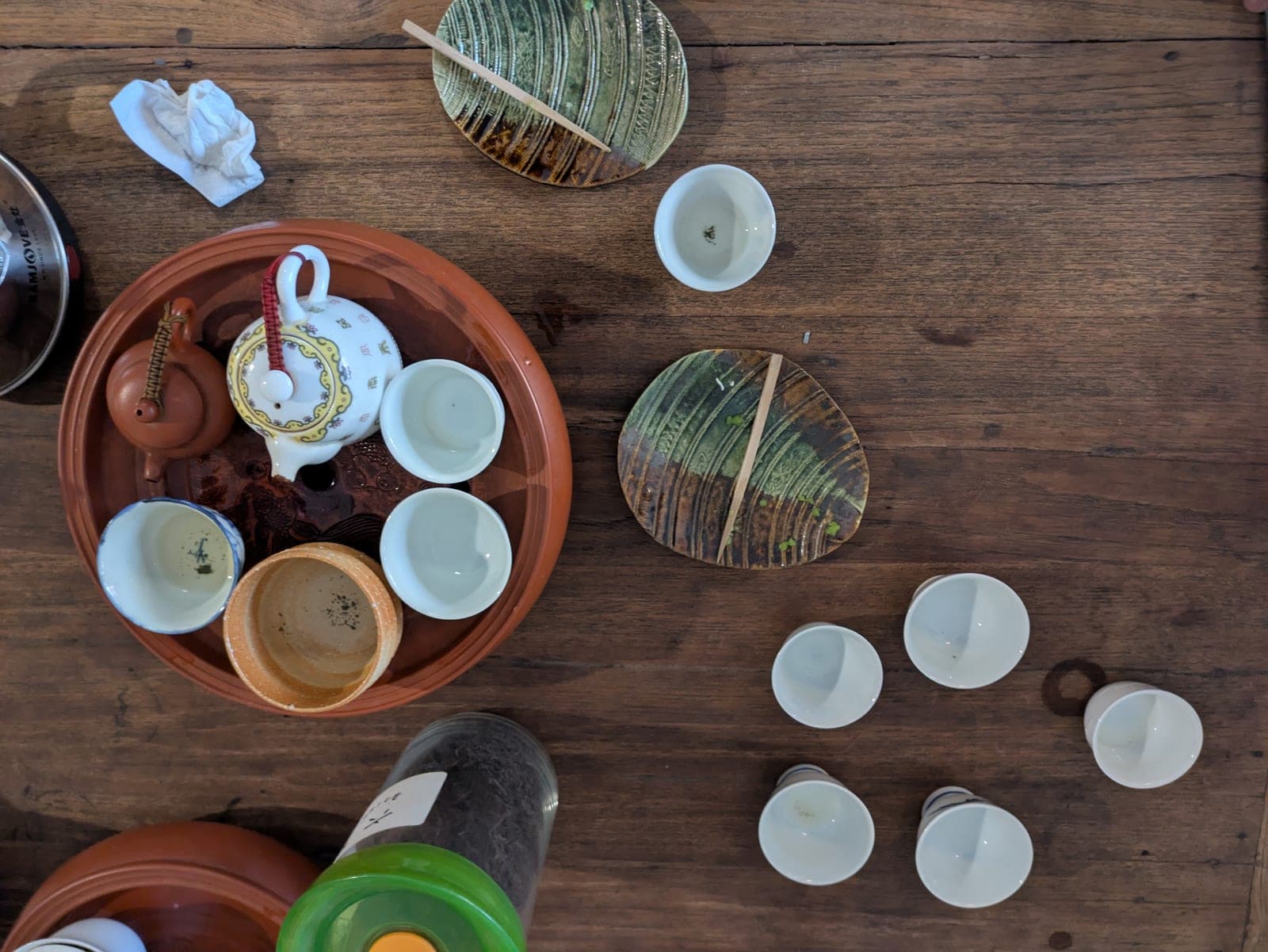
Porcelain, glazed, neutral. The gaiwan does not change your tea, it reveals it. Every flaw, every nuance, every steep arrives exactly as the leaf intended. This is why professional tasters use gaiwans: they need accuracy, not character.
A gaiwan is three pieces, lid, bowl, saucer, and nothing more. No handle, no filter, no spout. The technique takes a day to learn and a month to stop burning your fingers. After that, it becomes the most intuitive brewing tool you own.
The Yixing Pot
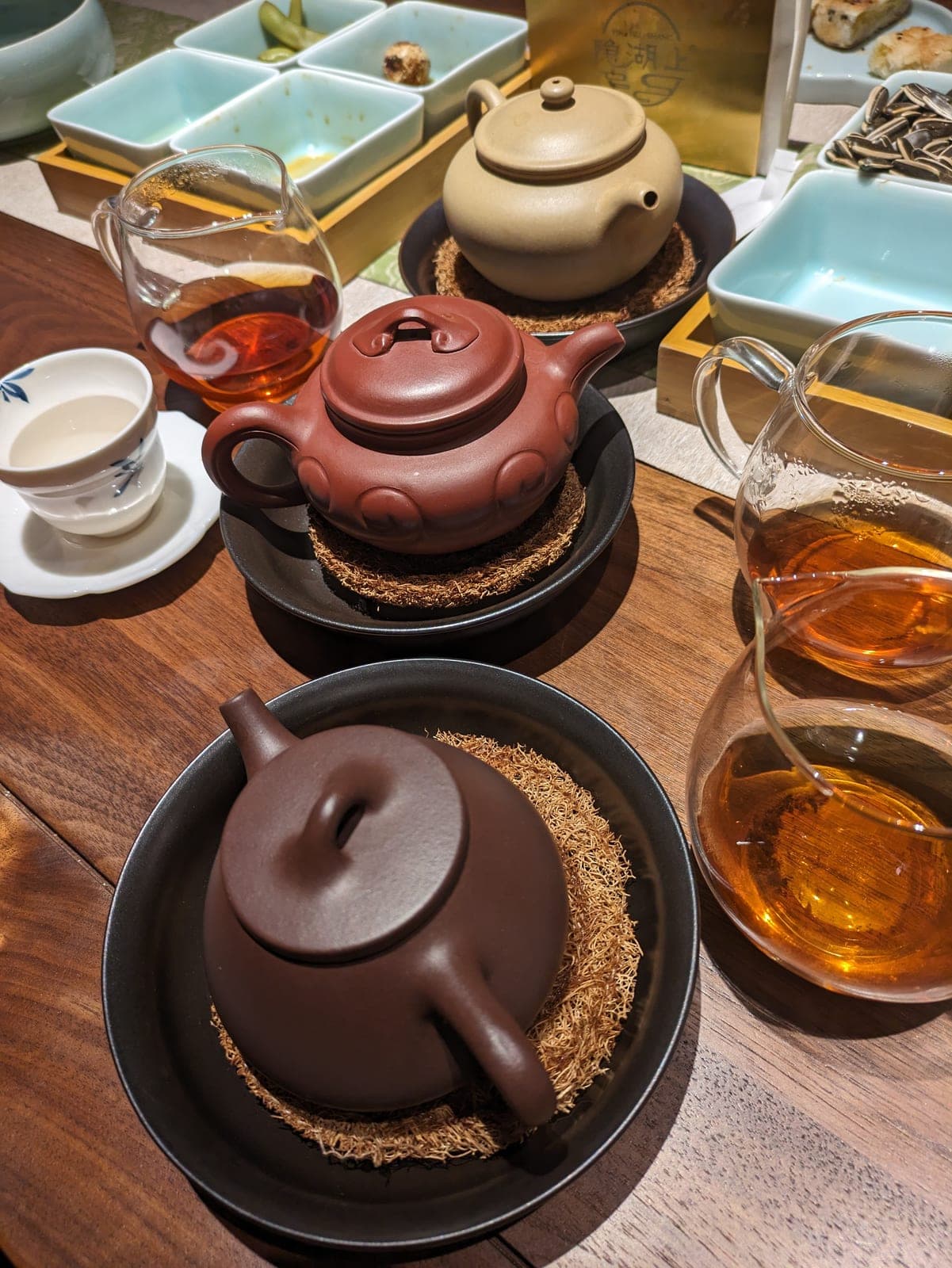
Unglazed clay from Yixing, Jiangsu province. Porous. Absorbent. Alive. A yixing pot does what porcelain never can: it remembers. With each session, the clay absorbs trace oils from the tea, building a patina that subtly enriches future brews.
This is why serious puer and yancha drinkers dedicate a pot to a single tea type. Over months and years, the pot becomes a partner in the brewing, contributing a fullness and roundness that porcelain cannot replicate. The Chinese term is 养壶 (yǎng hu), to raise, or nurture, a pot.
Side by Side
| Gaiwan | Yixing Pot | |
|---|---|---|
| Material | Glazed porcelain | Unglazed zisha clay |
| Heat retention | Moderate, cools fast | High, stays hot |
| Flavour impact | Neutral | Rounds and smooths over time |
| Versatility | Any tea, any time | Best dedicated to one type |
| Maintenance | Rinse with water, done | No soap, ever. Rinse and air dry |
| Learning curve | Handle technique, 1 week | None (has a handle) |
| Ageing potential | None, always the same | Improves with use over years |
| Best teas | Greens, whites, light oolongs | Puer, yancha, red teas |
Exploration favours gaiwans. Dedication favours yixing.
When to Use Which
If you are trying a tea for the first time, gaiwan. If you are comparing two teas, gaiwan. If you are evaluating quality, gaiwan. The neutrality of porcelain is your best friend when you need honest information.
If you have found your tea, the one you brew every morning, the one you buy by the cake, that is when a yixing pot earns its place. The pot will learn the tea, and the tea will reward the pot. This is not metaphor. The clay absorbs and returns.
Most serious gongfu drinkers own both. The gaiwan stays in rotation permanently. The yixing pot comes out for specific sessions. Neither replaces the other.
Which Teas Suit Which Vessel
Better in a gaiwan
Better in a yixing pot
More like this
Explore TEAKI Articles