Tea Types
One plant. The differences are in what happens after the leaf is picked.
Every tea, green, white, oolong, red, every single one, comes from the same plant: Camellia sinensis. What separates them is processing. How long the leaves oxidise. Whether they are fired, steamed, rolled, piled, or left alone. The result is a spectrum of categories that span from the barely-touched freshness of a white tea to the deep, fermented complexity of a puer. TEAKI maps nine: the traditional Chinese six, plus black (the estate tradition), puer (separated from dark), and matcha (its own ritual).
Green Tea · 绿茶
The most consumed tea in China by volume. Green tea is defined by what does not happen to it: the leaves are picked and then quickly heated, either pan-fired (Chinese method) or steamed (Japanese method), to halt oxidation. The result is a tea that tastes close to the living leaf: vegetal, sweet, sometimes nutty, sometimes marine.
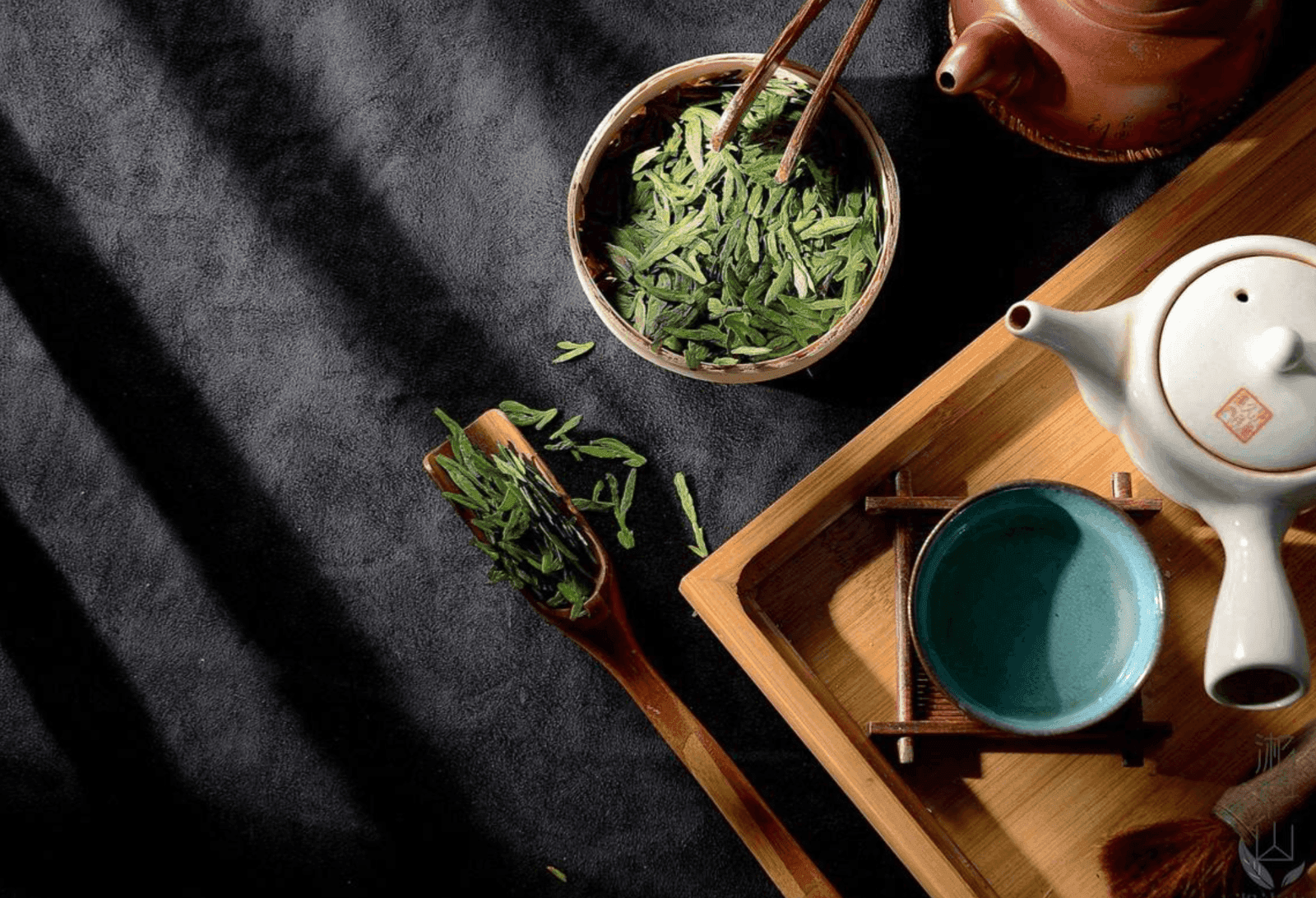
The best Chinese greens are picked in early spring, before the Qingming festival (清明, around April 5). These mingqian (明前) teas are made from the tiniest buds and command the highest prices. Longjing from Hangzhou, Bi Luo Chun from Suzhou, Anji Baicha from Zhejiang, each spring, for about two weeks, these are the most sought-after teas in China.
White Tea · 白茶
The least processed of all teas. White tea is picked, withered in the sun or indoors, and dried. No rolling, no firing, no oxidation control. The leaves keep their downy silver hairs (白毫, báiháo) and the result is soft, sweet, and often described as “effortless.”
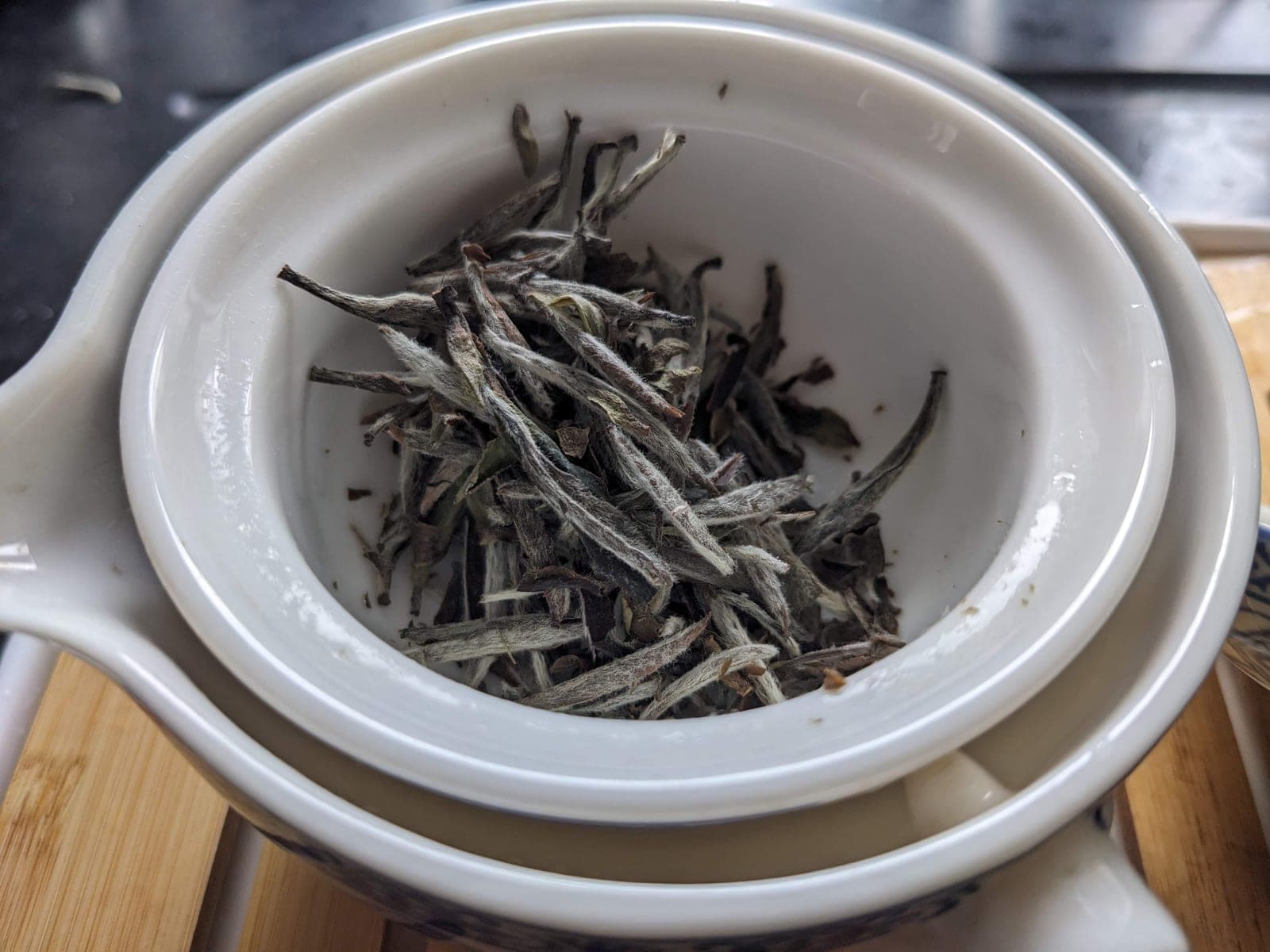
Fuding and Zhenghe in Fujian province produce most of China’s white tea. Silver Needle (白毫银针) is buds only, expensive, delicate, and subtle to the point of being almost imperceptible to new drinkers. White Peony (白牡丹) includes the first leaf pair and has more body. Aged white tea (5+ years) develops completely different characteristics: warmth, sweetness, dried fruit. It is increasingly valued by collectors.
Yellow Tea · 黄茶
The rarest category. Yellow tea is processed like green tea, with one extra step: 闷黄 (mèn huáng), or “sealing yellow.” After the initial firing, the leaves are wrapped in cloth or paper and left to gently oxidise in their own residual heat. This mellows the grassy edge of green tea, producing something softer, sweeter, and slightly more complex.
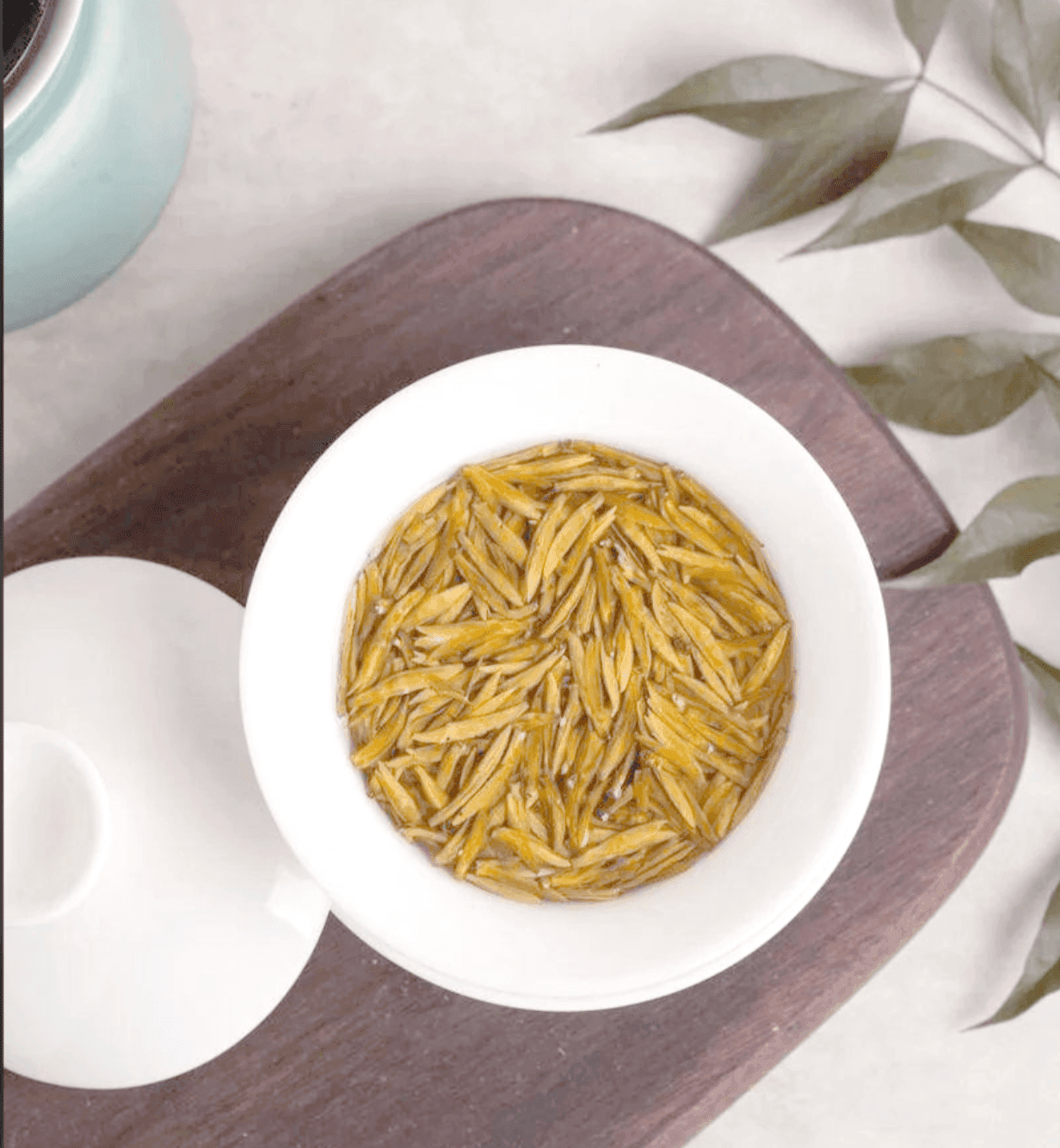
Only a handful of producers still make true yellow tea. Junshan Yinzhen from Hunan’s Junshan Island is the most famous, a bud-only tea from a tiny growing area. Mengding Huangya from Sichuan and Huoshan Huangya from Anhui are the other two notable yellows. Most “yellow tea” sold online is actually green tea with yellow packaging.
Oolong Tea · 乌龙茶
Oolong is the broadest category, a spectrum within a spectrum. Oxidation ranges from 15% to 85%, which means a light Taiwanese high-mountain oolong (creamy, floral, almost green) shares a category with a heavy-roasted Wuyi yancha (mineral, chocolatey, charcoal-kissed). They taste nothing alike. They are both oolongs.
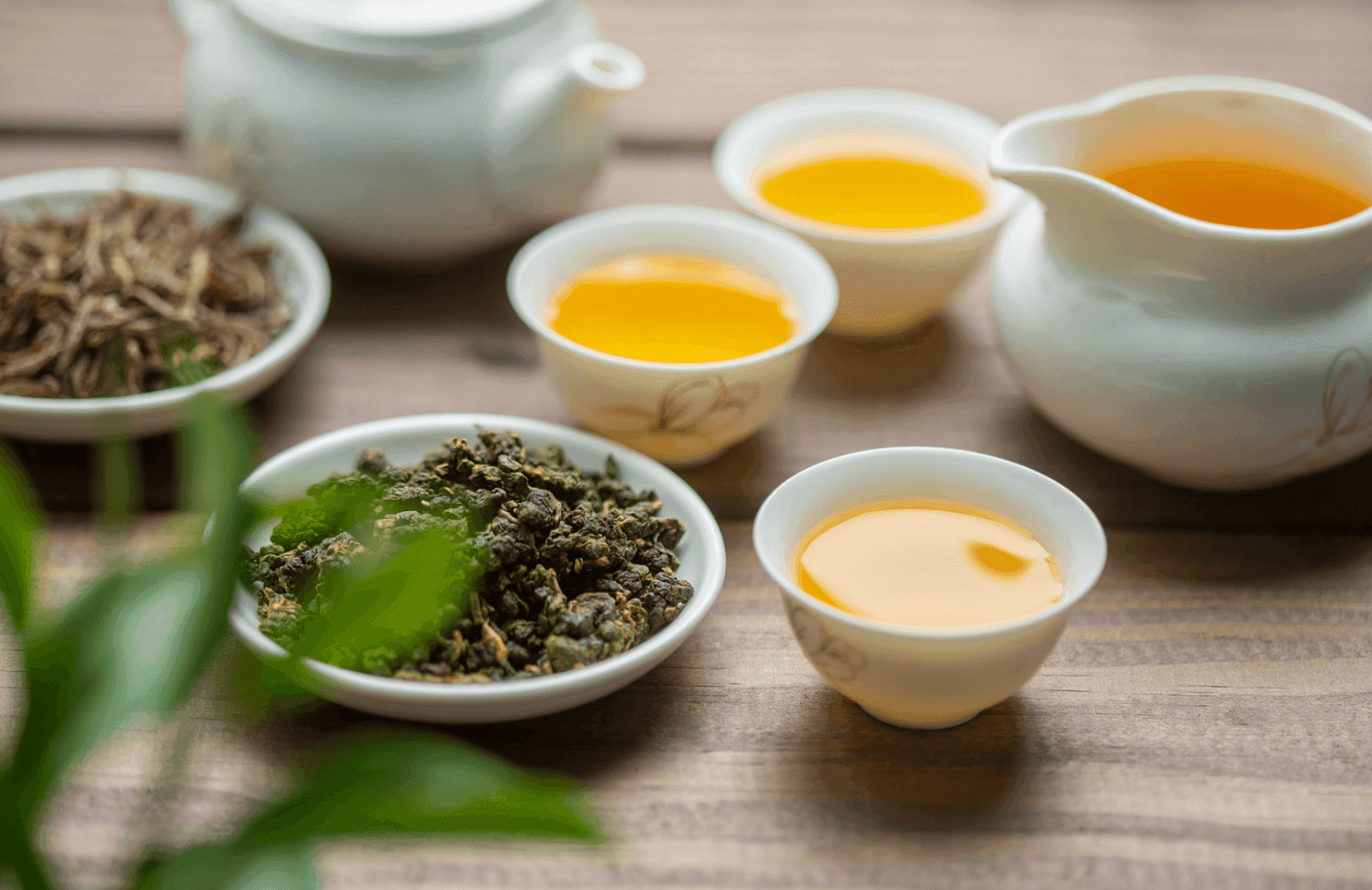
The key processing step is controlled oxidation through bruising or tossing the leaves, followed by precise roasting. Fujian’s Wuyishan produces the great rock oolongs (岩茶): Da Hong Pao, Rou Gui, Shui Xian. Guangdong’s Phoenix Mountain produces Dan Cong (单丛), each variety named after its aroma: almond, grapefruit, ginger flower. Taiwan produces the high-mountain oolongs (高山茶) at elevations above 1,000 metres: Li Shan, Ali Shan, Da Yu Ling. The finished leaves are either tightly rolled into balls (most Taiwanese oolongs, Tieguanyin) or left as twisted strips (most Wuyi yancha, Dan Cong).
Red Tea · 红茶
What the West calls “black tea,” China calls red tea (红茶, hóngchá), named for the colour of the liquor, not the leaf. Fully oxidised. The leaves are withered, rolled to break cell walls, oxidised until they darken, then fired to stop the process. The result is rich, malty, smooth, and often sweet.
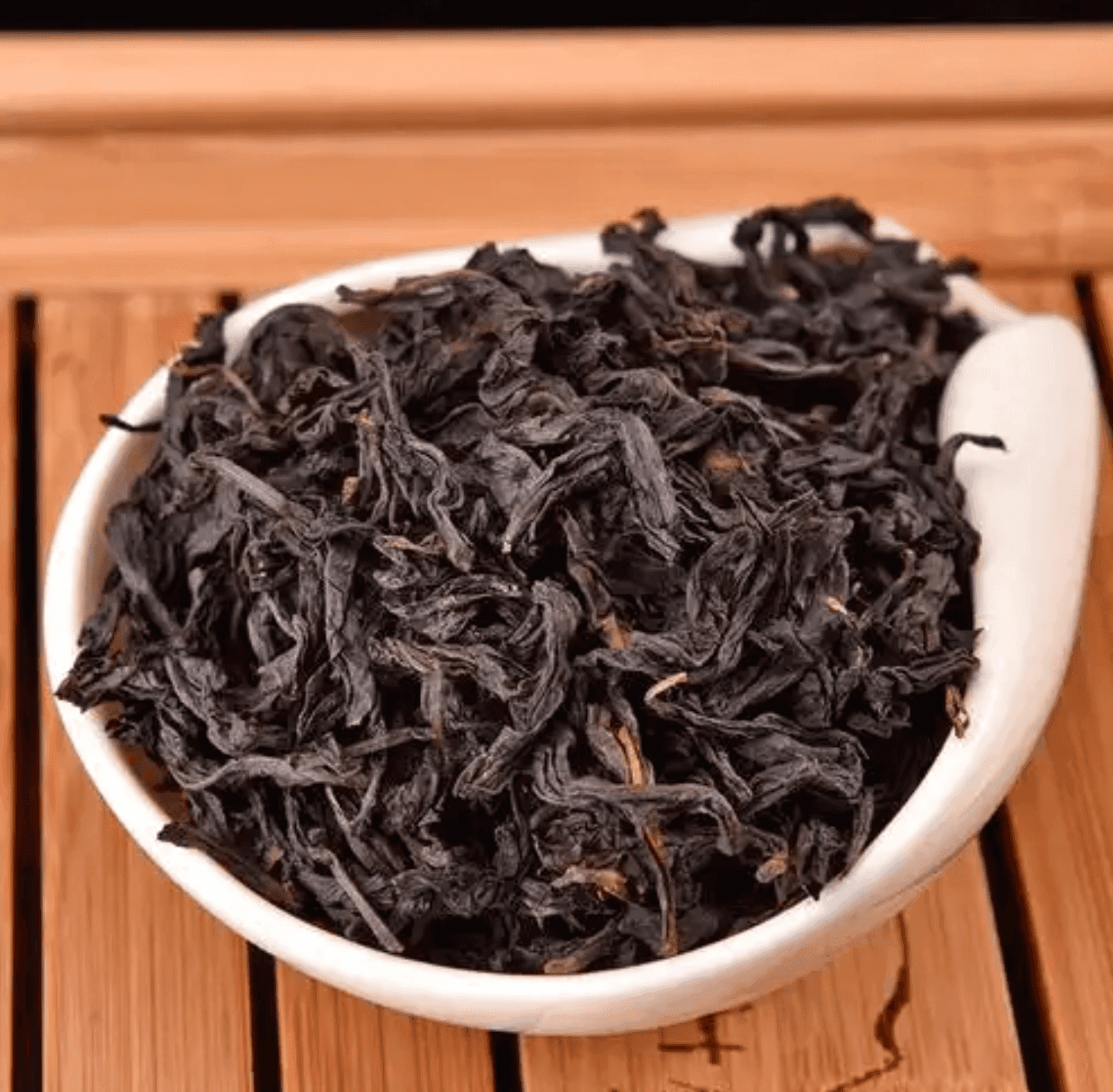
China’s red teas are a different world from the commodity-grade “black teas” that fill supermarket shelves. Zhengshan Xiaozhong (正山小种, the original “Lapsang Souchong”) from Wuyishan is floral and honeyed, nothing like the smoky imitation. Keemun (祁门红茶) from Anhui has a winey complexity. Jin Jun Mei (金骏眉), made from tiny golden buds, commands prices that rival aged puer.
Black Tea
The same fully oxidised process that we described above also produced what is known as “black tea.” TEAKI uses both terms: red for teas rooted in the Chinese craft tradition (Zhengshan Xiaozhong, Jin Jun Mei, Dian Hong, Keemun), and black for the estate tradition that grew out of colonial-era plantations (Darjeeling, Assam, Ceylon, Nilgiri, Kenya).
The split is not arbitrary. Chinese red teas are typically made from small-leaf or medium-leaf cultivars, hand-processed in small batches, and brewed gongfu. Estate black teas are made from large-leaf Assam varietals, processed at scale, and brewed in a pot or cup with a strainer. They occupy different shelves, different price curves, and different rituals. Calling them both “black tea” hides a real difference in what you are drinking and how you are drinking it.
Darjeeling First Flush is the most celebrated estate tea: picked in spring in the Himalayan foothills, light, muscatel, and closer in spirit to an oolong than to a breakfast blend. Ceylon teas from Nuwara Eliya and Uva are bright and citric. Assam is malty and thick, the backbone of every English Breakfast. Nilgiri Frost, Kenya Purple, and the Georgian teas are newer to the specialty world and worth exploring.
Dark Tea · 黑茶
Dark tea (黑茶, hēichá) is the only category that involves microbial fermentation, not just oxidation, but actual fermentation driven by bacteria and fungi. The leaves are piled while still damp, covered, and left for weeks or months. Microorganisms do the work: breaking down compounds, building new flavours, creating something that tastes nothing like the leaf that went in.
Liu Bao (六堡) from Guangxi is the great dark tea that is not puer. Basket-aged, earthy, smooth, often with a betel nut sweetness. Fu Zhuan (茯砖) from Hunan is a brick tea colonised by golden flowers (金花, jīnhuā), a beneficial fungus that gives it a distinctive wheat-like character. Qing Zhuan from Hubei, Tibetan brick tea, Hunan dark tea: these are everyday teas in their home regions, consumed with meals, traded for centuries along the Tea Horse Road. Dark teas and puer almost always come compressed into cakes, bricks, or tuos: the shape is part of the aging.
Puer · 普洱茶
Puer comes from Yunnan province and nowhere else. It is made from large-leaf Yunnan varietals (大叶种, dàyè zhǒng), and it comes in two forms: sheng (生, raw), which is pressed and aged naturally over years or decades, and shou (熟, ripe), which undergoes accelerated fermentation in piles (渥堆, wò duī) over 45 to 60 days. The wò duī technique was developed across Yunnan in the early-to-mid 1970s, with early trials at the Kunming Tea Factory and the method standardised at the Menghai Tea Factory, to simulate decades of natural aging in a fraction of the time.
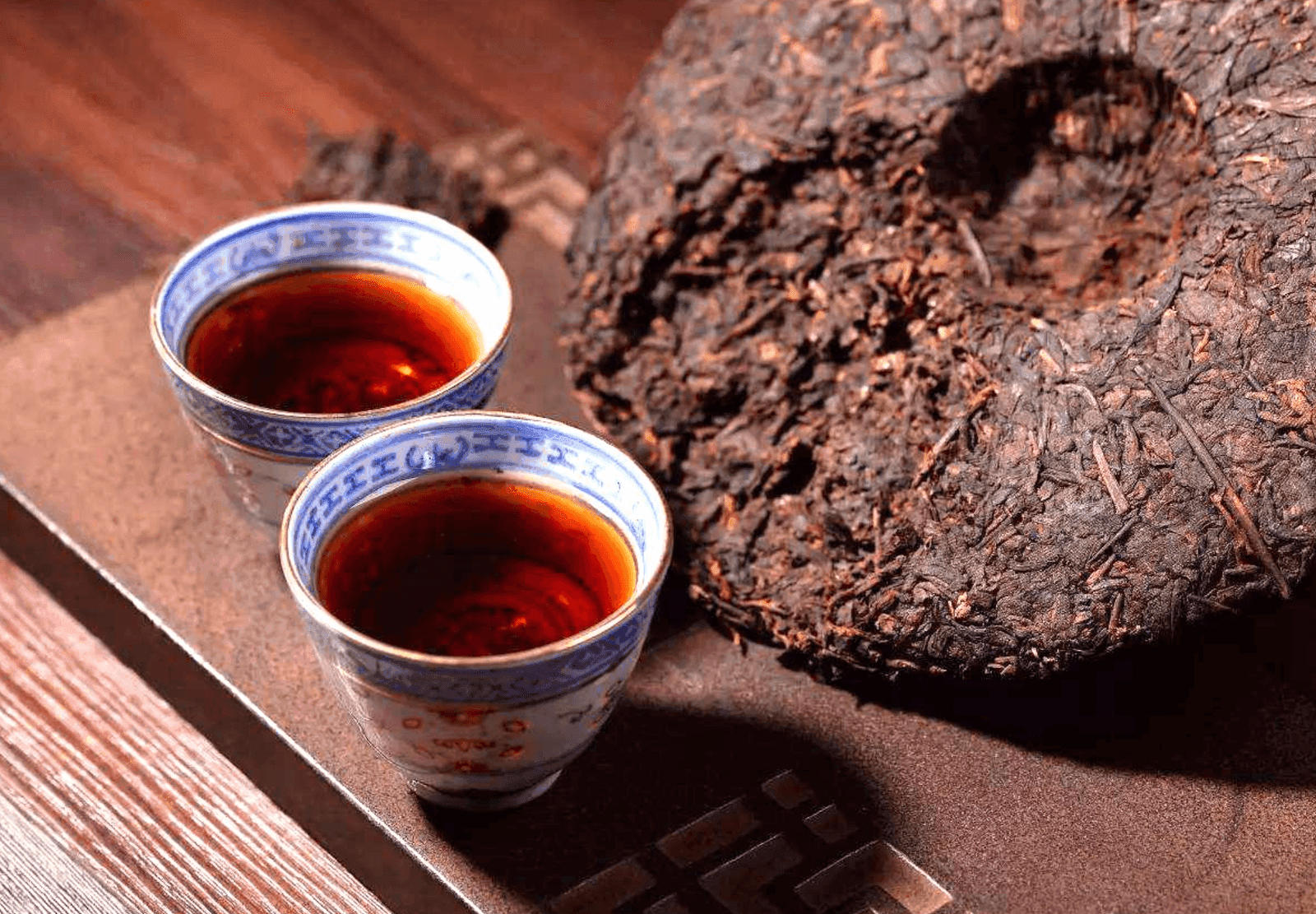
Puer is the tea world’s closest equivalent to wine. Terroir matters: a tea from Lao Banzhang tastes completely different from one from Yiwu, even if made from the same varietal. Age matters: a 2005 sheng puer has had twenty years of slow microbial transformation. Storage matters: dry-stored puer (Kunming) develops differently from wet-stored puer (Guangdong, Hong Kong). Young sheng is bitter, floral, and intensely alive. Aged sheng opens up into something dried-fruit sweet and impossibly deep. Shou, when well-made, tastes like dark chocolate, wood, and dates.
Matcha · 抹茶
Matcha is green tea, stone-ground into a fine powder. But the process that gets it there is so specific, and the result so different from any other green tea, that TEAKI treats it as its own category. The tea bushes are shaded for three to four weeks before harvest (覆下栽培, fukashita saibai), which forces the plant to overproduce chlorophyll and amino acids. The leaves are steamed, dried flat into tencha (碾茶), and then ground between granite millstones at about 40 grams per hour.
The result is a tea you do not steep. You whisk the powder directly into hot water with a bamboo chasen (茶筅), and you drink the whole leaf. This changes everything: the texture is creamy, the umami is intense, the caffeine hits differently because it is bound to L-theanine. Uji (Kyoto), Nishio (Aichi), and Yame (Fukuoka) are the three major producing regions. Ceremonial grade is for drinking straight. Culinary grade is for lattes and baking, and honestly most of the matcha sold worldwide is culinary grade whether the label says so or not.
Oxidation is a spectrum, not a switch. These categories are useful landmarks, not hard borders.
Where to Start
One tea from each category. These are accessible, widely available, and clearly representative of their type. Each has step-by-step brewing guides on TEAKI.
One per category · brew any of these with TEAKI