Tea Mania
For about forty years, Britain’s medical and moral authorities decided tea was dangerous.
In the 1890s, doctors diagnosed patients with “tea mania.” The condition came with a long list of symptoms: headache, vertigo, insomnia, palpitations, mental confusion, nightmares, hallucinations, morbid depression of spirits, and suicidal feelings.
This was not a fringe view. Between roughly 1860 and 1900, doctors, clergymen, coroners, and newspapers built a genuine case against tea. They blamed it for insanity, infanticide, national decline, and revolution. The same drink that signalled middle-class respectability became, when the working class drank it, a public menace.
The panic reads as comedy now, but it is also another example of how a society misdirects its suspicion: away from a real threat hidden in plain sight, and toward the wrong target, the one that is new and foreign.
A dangerous revolutionary force
Bangor, October 1883. Henry Thomas Edwards, the Dean of Bangor, is speaking at a meeting on cookery education. Edwards is an Oxford-educated Welsh churchman, a serious reformer who cared about working-class life and fought to keep the Welsh language in Welsh schools. He also firmly believes that tea is going to bring down social order.
His argument, reported in the North Wales Chronicle the next morning: bad housewives make bad tea, bad tea wrecks the nerves, wrecked nerves breed discontent, and discontented people make revolutions.
“Excessive tea-drinking creates a generation of nervous, hysterical, discontented people, always complaining of the existing order of the universe,” he said. “Overmuch tea-drinking, by destroying the calmness of the nerves, is acting as a dangerous revolutionary force amongst us.”
He thought tea might explain the French Revolution. “Once nations begin to drink tea, they lose respect for the ancient constitutions, and promote eras of reform and revolution.”
Another speaker at the same meeting warned that a woman who could not cook would “boil the kettle for ever, and enfeeble her husband and sons by drenching them with oceans of tea.” The local paper ran a satirical poem about the whole affair, “De Tea Fabula.” Even in 1883, plenty of people found the Dean ridiculous, but plenty more agreed. Edwards’ rhetoric spoke to a deeper anxiety taking shape in Victorian Britain.
Thus the tea kettle goes before the gin bottle
A century earlier, Britain had its Gin Craze. Hogarth’s Gin Lane of 1751, the engraving at the top of this piece, shows a mother so drunk she lets her baby slip from her arms. The temperance movement that grew through the nineteenth century held up tea as the wholesome alternative, the drink that would keep the working man out of the pub and the working woman sober. Temperance halls served tea. The entire point of tea, for the reformers, was that it was not gin.
And yet here was a Dean, in the middle of temperance country (North Wales had active temperance associations from the 1860s), arguing that the cure had become the disease. The kettle now led to the gin bottle rather than away from it.
So great was the anxiety around excessive tea consumption that it was now being labelled worse than the gin it was meant to replace.
The clergyman and the monkey
The fear had already reached fiction, and it had chosen a clergyman.
In 1869 Sheridan Le Fanu, one of the great Victorian writers of the uncanny, published a story called “Green Tea.” Its protagonist is the Reverend Mr Jennings, a mild and scholarly vicar who drinks a great deal of strong green tea to fuel his late-night theological reading. The tea, the story suggests, causes Jennings to hallucinate. He begins to see a small monkey with glowing red eyes. At first it is a nuisance. Then it follows him everywhere, into the pulpit, onto the train. It urges him toward blasphemy, then toward self-destruction and ultimately his death.
The surprise is who he chose. The medical literature of the period almost always cast the tea victim as a working-class woman. Le Fanu made his a respectable clergyman, and in doing so turned a class anxiety into a universal horror: that the quiet cup beside the reading lamp might be a door to something that wants you gone.
“Green Tea” is still anthologised as one of the finest ghost stories in English. It is also, read in its own period, a perfectly straight dramatisation of the medical consensus. Stimulant, taken in excess, produces hallucination and then dissolution.
Death by tea poisoning
The coroners agreed with the novelists.
In 1869 the Lancet, the most respectable medical journal in Britain, reported a coroner’s verdict on a thirty-eight-year-old furniture dealer in Poplar: death by tea poisoning. In 1891 it recorded tea drinking as a factor in an infanticide case at Waltham Abbey. “Death by tea” was a phrase a Victorian coroner’s court could say aloud and a Victorian newspaper could print without flinching.
The medical case had been building for decades. In 1864 the physician Edward Smith, in an official report to the Privy Council, named working-class tea drinking as a national dietary problem. In 1870 Thomas King Chambers wrote, in a standard textbook on digestion, of women of the “lower orders” “sluicing themselves with tea.” In 1872 John Thomas Arlidge, a pioneer of occupational medicine, told the Medical Times and Gazette that tea was “as distinctly a narcotic poison as is opium or alcohol.”
Tea mania, the diagnosis
By the 1890s the loose anxiety had hardened into a diagnosis.
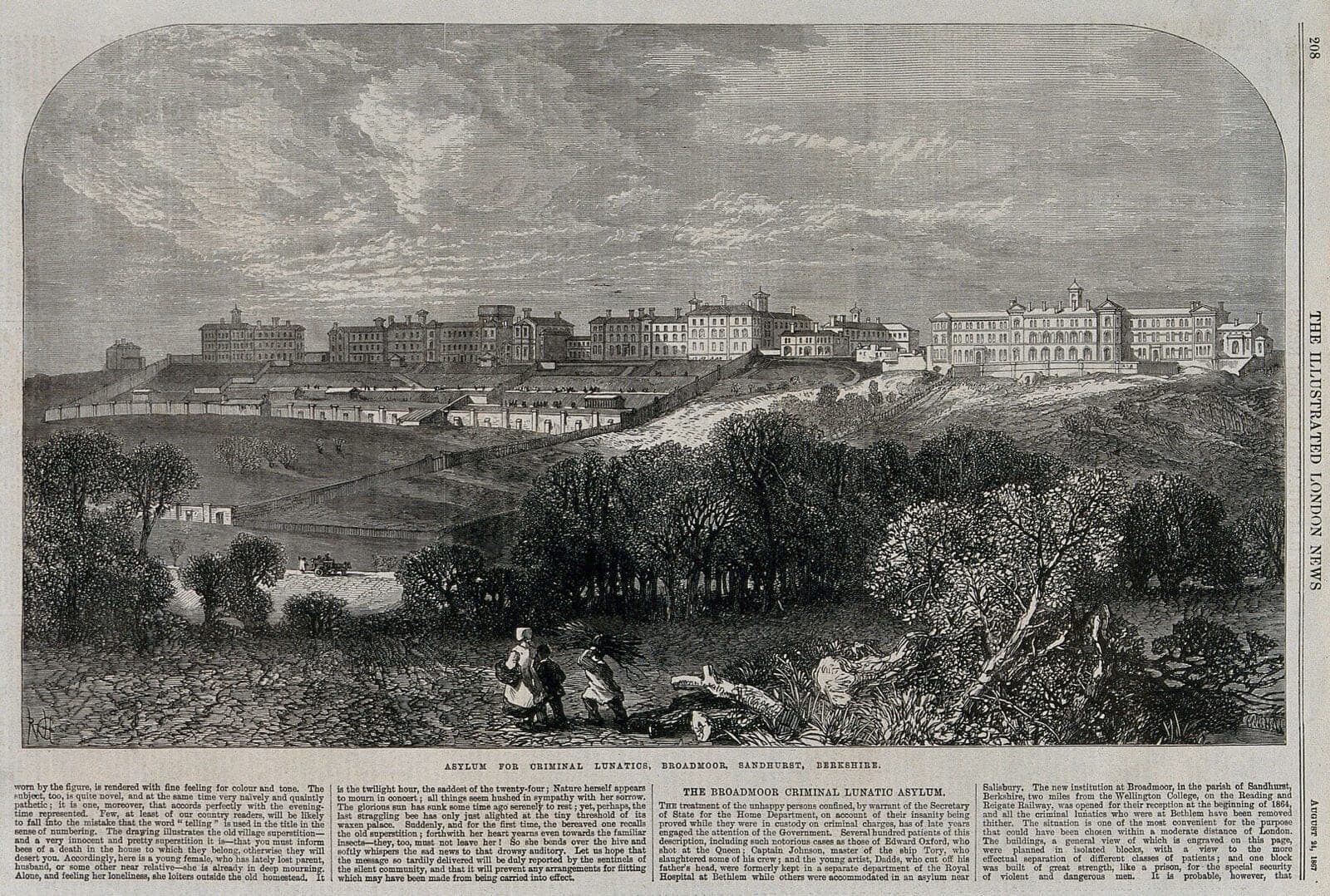
“Tea mania” had entered the psychiatric vocabulary. In Ireland, an official 1894 report to the Chief Secretary linked rising asylum admissions to stewed tea. Doctors recorded specific cases. A thirty-two-year-old domestic servant collapsed while cleaning a grate, suffered fits of laughing and crying, and was found, on examination, to be “hopelessly addicted to tea.”
A woman working long hours, hard physical work, on a diet of bread and butter, and tea throughout the day to keep going. She presented at a hospital with something a modern doctor would recognise at once, and which her own doctor recognised too, just under the wrong name.
The hedge-tea factories
On this count, the Victorians were not paranoid at all.
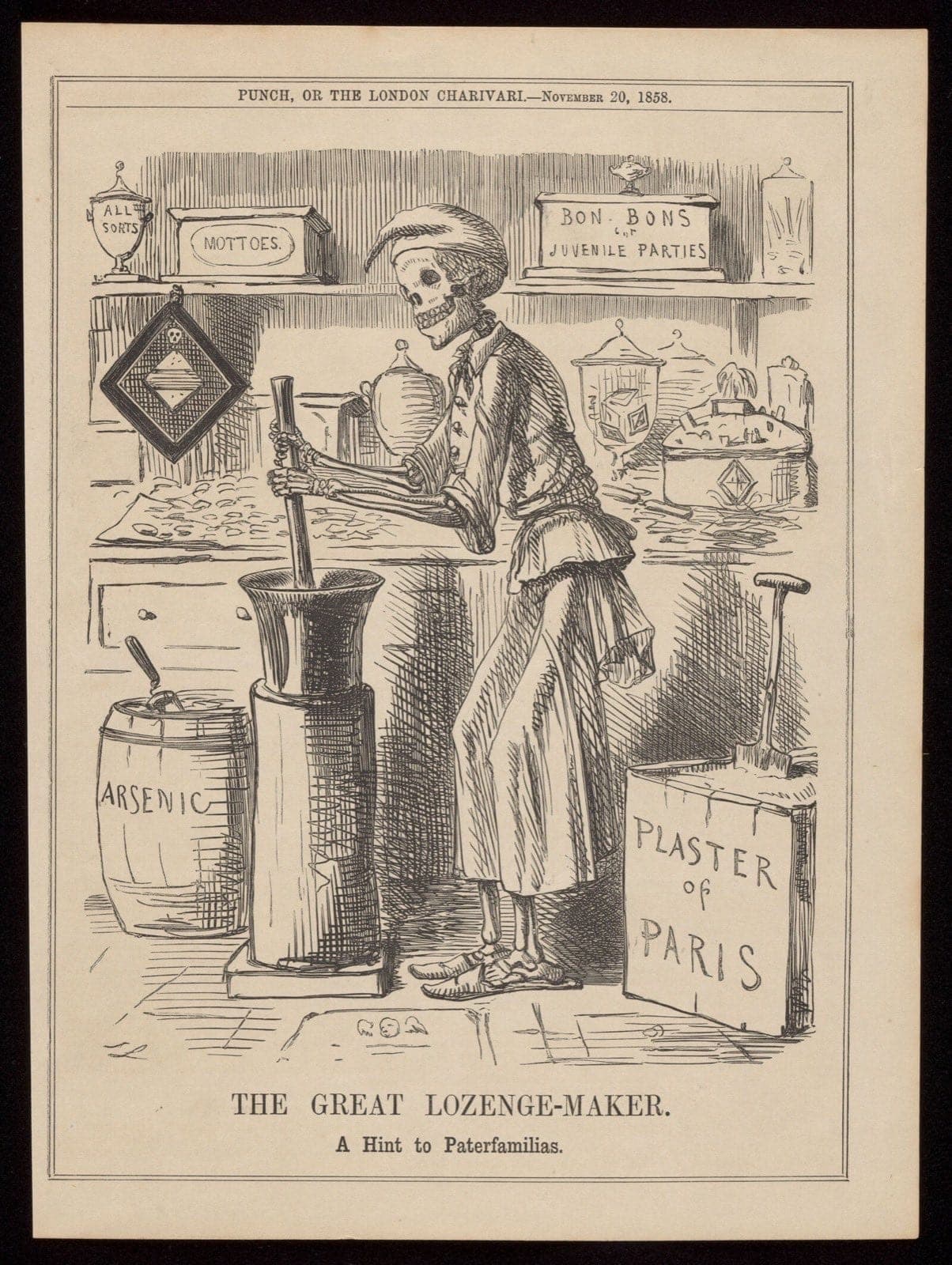
For much of the century, a great deal of what was sold as tea in Britain was not actually tea. As early as 1818, London had at least eight factories dedicated to “British tea”: hedge leaves, mostly sloe and ash, dried, curled to imitate the real leaf, and coloured. The green came from verdigris, a copper compound that is genuinely poisonous. The black came from logwood and iron. Sloe leaves bought at twopence a pound were sold as tea at three or four shillings, a markup of several hundred percent.
The chemist Friedrich Accum exposed the trade in 1820, named the men running it, and was hounded out of the country for his trouble. Decades later Arthur Hill Hassall put adulterated tea under a microscope and published what he found. The scandal helped drive the Sale of Food and Drugs Act of 1875.
So when a Victorian worried that the tea in a poor household was doing real harm, they weren’t exactly incorrect, but the danger was in the fraud, not in the leaf itself.
What they were almost right about
Strip away the verdigris and the monkeys and the revolution, and a real thing remains.
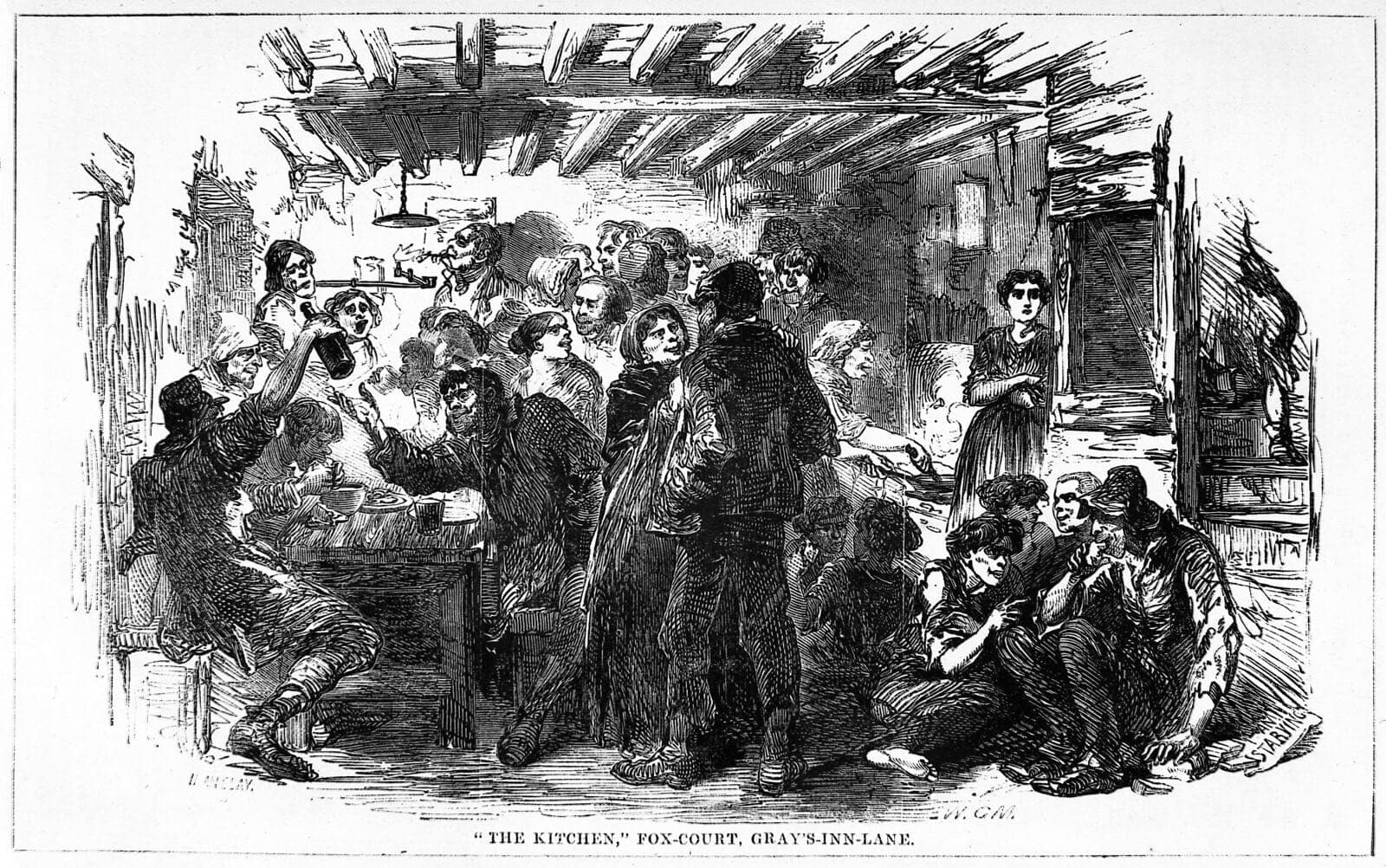
Working-class tea in late Victorian Britain was not the pale cup of the drawing room. It was stewed: left on the hob, brewed long and strong, drunk many times a day with milk and sugar, often the warm centre of a diet that was otherwise bread and not much else. From around 1880, cheap Indian tea, stronger than the Chinese tea it was replacing, poured into these households at scale for the first time. The trade associations marketed it precisely on that strength. “Indian teas are stronger,” ran the advertising. “Indian teas are cheaper.”
A ten-minute steep, taken six times a day, delivers a substantial dose of caffeine and tannins. Modern measurement confirms what the stomach already knew: a long steep roughly doubles the caffeine of a short one and keeps pulling tannins out well beyond that. The servant with the laughing fits, the asylum admissions, the palpitations and the sleeplessness: a population was consuming a genuine stimulant in genuine quantity, on empty stomachs, for the first time in its history.
It is what a modern doctor would call caffeine intoxication, or caffeinism.
But the doctors at the time called it the moral failure of women rather than a question of dose. (For what tea actually does to the body, see Tea High, Tea Drunk.)
Tea was not the first
Coffee even has its own version of the tea-poisoning story. King Gustav III of Sweden was so certain coffee was lethal that, the tale goes, he had a condemned prisoner drink it daily and a second drink tea, to see who would die first. Both outlived the king. The tea drinker died first, at eighty-three.
The pattern
While Victorian doctors were calling tea “as distinctly a narcotic poison as opium,” they were drinking tea that the British state had gone to war to secure. The economics of the nineteenth-century tea trade ran on a triangle: India grew opium, Britain forced it on China, the silver paid for Chinese tea, and the tea came home. When China tried to stop the opium, Britain fought two wars to keep the arrangement running. Tea was worth a war.
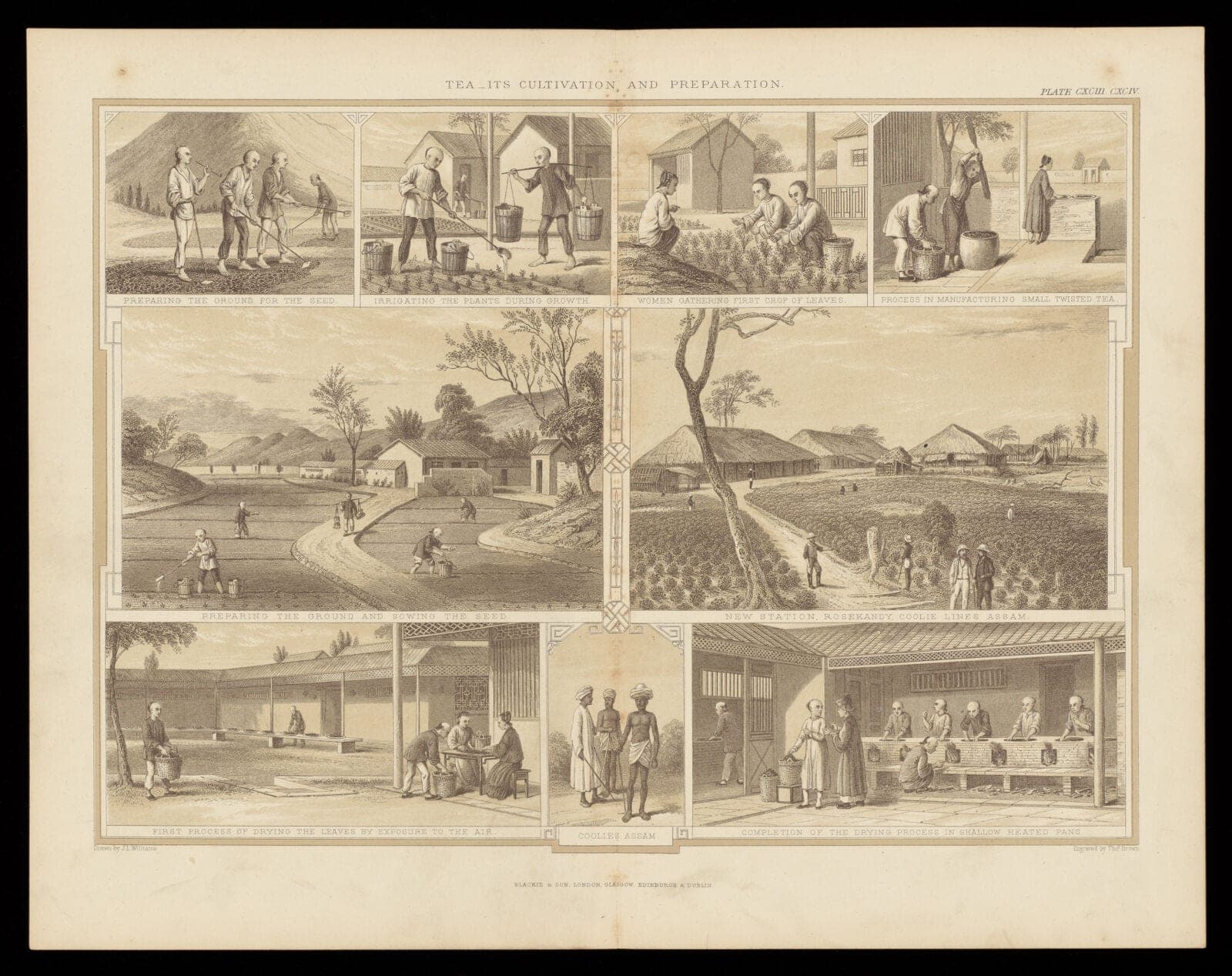
Looking back: an empire that fought for tea, then decided tea was poison, then forgot it had ever worried.
That is how these panics end: they evaporate. By the late 1890s the medical case was collapsing. The Pall Mall Gazette mocked “certain hysterical individuals” frightening the public “with regard to the terrible dangers which lurk in the teapot.” Tea companies began selling “tannin-free” and “digestive” blends. Within twenty years of the Dean of Bangor’s revolutionary force, tea was simply breakfast.
We have seen it before and since. A substance arrives, new or foreign or newly cheap enough for the wrong people to enjoy. The anxiety attaches, dressed as medicine and morality, and it tracks who is drinking far more closely than what is in the cup. Gin had its Lane, tea had its mania, and the next entry is already being written. As for the kettle: it lost its menace, and went quietly back to being a kettle.
Sources
The Victorian tea panic is documented in detail by Ian Miller, “‘A Dangerous Revolutionary Force Amongst Us’: Conceptualizing Working-Class Tea Drinking in the British Isles, c. 1860-1900,” Cultural and Social History 10:3 (2013). The specific claims above draw on:
- The Dean of Bangor’s speech, the second speaker, and the satirical “De Tea Fabula” reply: “Practical Cookery in Elementary Schools,” North Wales Chronicle, 13 October 1883.
- Sheridan Le Fanu, “Green Tea,” in In a Glass Darkly (1872; first serialised in All the Year Round, 1869).
- Edward Smith, Sixth Report of the Medical Officer of the Privy Council (1864).
- Thomas King Chambers, The Indigestions (1870).
- John Thomas Arlidge, Medical Times and Gazette (1872), on tea as “a narcotic poison.”
- “Death by tea poisoning” verdicts: The Lancet (1869 and 1891).
- “The Abuse of Tea,” Belfast Newsletter (27 September 1887).
- Alleged Increasing Prevalence of Insanity in Ireland: Special Report from the Inspectors of Lunatics (1894).
- Friedrich Accum, A Treatise on Adulterations of Food and Culinary Poisons (1820); Arthur Hill Hassall, Food and Its Adulterations (1855); the Sale of Food and Drugs Act (1875).
- Pall Mall Gazette (1897), on the panic’s decline.
- On the wider pattern: Charles II, A Proclamation for the Suppression of Coffee Houses (1675); James I, A Counterblaste to Tobacco (1604); and standard histories of the opium-silver-tea trade and the Opium Wars (1839-42, 1856-60).
- On caffeine and tannin extraction by steep time: recent laboratory analysis (2025).
More like this
Explore TEAKI Articles